 In Front of the
In five lines
In a bar with real craft, the menu is the floor, not the ceiling. Above it live the experiences no piece of paper captures: the cocktail created to measure from the guest’s tastes, the special spirit told in twenty seconds, the preparation ritual that turns a drink into a small show. It is the most experiential upselling there is — the guest doesn’t pay more to drink more: they pay more to live something made for them. And it has the same two conditions as always: the price stated beforehand, and the bar’s limits (lesson 24) intact: the experience is never sold to someone who shouldn’t keep drinking.
The script, step by step
- 1The question that opens the workshop. To the guest who is settled in and receptive: “Shall I make you something off the menu? Tell me what you like: citrusy, dry, sweet, smoky?” Three answers from them and you have the most personal commission in the hotel: a cocktail that didn’t exist until they arrived. Present it with its price up front: “I’ll make you something tailor-made for [X].”
- 2The spirit with a story. The special bottle on the top shelf sells itself if it is told well: “If you like [type], I have one off the menu — [twenty-second story: where it’s from, what makes it different] — [X] a glass.” Short story, clear price, zero solemnity: it is a recommendation between connoisseurs, not an auction.
- 3The right moment. Never in the first minute — the first order is their landing. The off-menu lives in the second order, in the lingering after dinner, in the conversation that is already flowing: when the guest is comfortable, the proposal is a gift; when they have just sat down, it is pressure.
- 4The visible ritual. Preparation in plain sight — the careful gesture, the hand-carved ice, the chilling of the glass, the presentation — is half the value: they are also paying for the discreet show. The visible hygiene of lesson 26 and the calm theater of the craft, in the same shaker.
- 5Christen it and give it to them. The master touch that costs nothing: “Did you enjoy it? Then it has a name now: the [their surname / something from the conversation]. When you come back, ask for it by name.” You have just turned a drink into a reason to return — the bar’s memory (lesson 24) working for loyalty.
With limited resources: how to hold the standard
In front of the guest
State the price before you prepare it, always. Read whether the guest is up for an experience or for their usual drink in peace.
Turn the off-menu into an invasive show for the whole bar. Put showing off your technique above the guest.
Invent false vintages, origins or exclusivity. And never use the off-menu to prolong the drinking of someone who shouldn’t continue: the limits of lesson 24 override any sale — no exceptions, and no tip can buy one.
Common mistakes
- Offering it to everyone by default: the off-menu is a tailor-made suit; offered off the rack, it becomes a menu by another name.
- The taste question as an interrogation: three flowing questions are enough; seven are a guest card.
- Preparing it with your back turned: the visible ritual is half of what they are paying for.
- Not recording the success: the cocktail’s recipe and the relevant service preference are noted in the bar’s authorized medium — with the same limits as lesson 24: only what is needed to serve them better, with access for whoever serves them — and that is what turns it into a repeat guest’s “the usual.”
“The cocktail on the menu gets ordered.
The one you made for them gets talked about.”
Design your off-menu for this week: your taste question, three different creations for three typical answers (citrusy, dry, sweet) with their prices, and your spirit with a twenty-second story. In the answer that follows, I share mine.
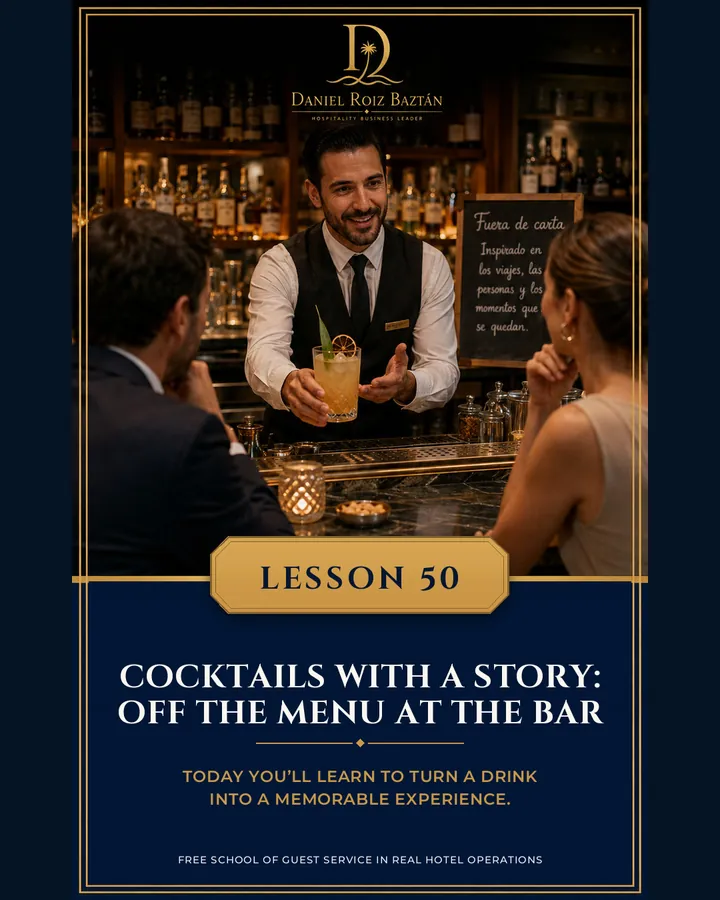
Cocktails With a Story: Off the Menu at the Bar
My off-menu selection, so you can see the mechanism. The question, at the second order and only if the conversation is flowing: “May I make you something off the menu? Tell me which way you lean: citrus, dry, sweet?” Citrus: a gin base with lime, a touch of basil from the garden and a sparkling-wine top — fresh, aromatic, with a twist. Dry: an Old Fashioned with our own house touch, described while it’s being made. Sweet: a rum base with vanilla and a hint of coffee. And always, BEFORE touching the shaker: “I’ll make it for you for [X].”
The spirit with a story: “If you like rum, I have one off the menu that we keep in just a few bottles — [where it’s from, what makes it different, in twenty seconds] — at [X] a glass. It deserves to be sipped slowly.” No solemnity, no tasting sermon: a confidence between connoisseurs.
And the close that multiplies everything: if they liked it, it gets christened — “well, now it has a name: the [their surname]. When you come back, ask for it by that name.” A cocktail with their name on it is the cheapest loyalty builder ever invented: you’ve just given them a reason to come back AND a story they’ll tell at home — with your bar as the star. Remember the non-negotiable limit of lesson 24: the experience is never sold to someone who shouldn’t keep drinking. No sale is worth more than that judgment.