 In Front of the
In five lines
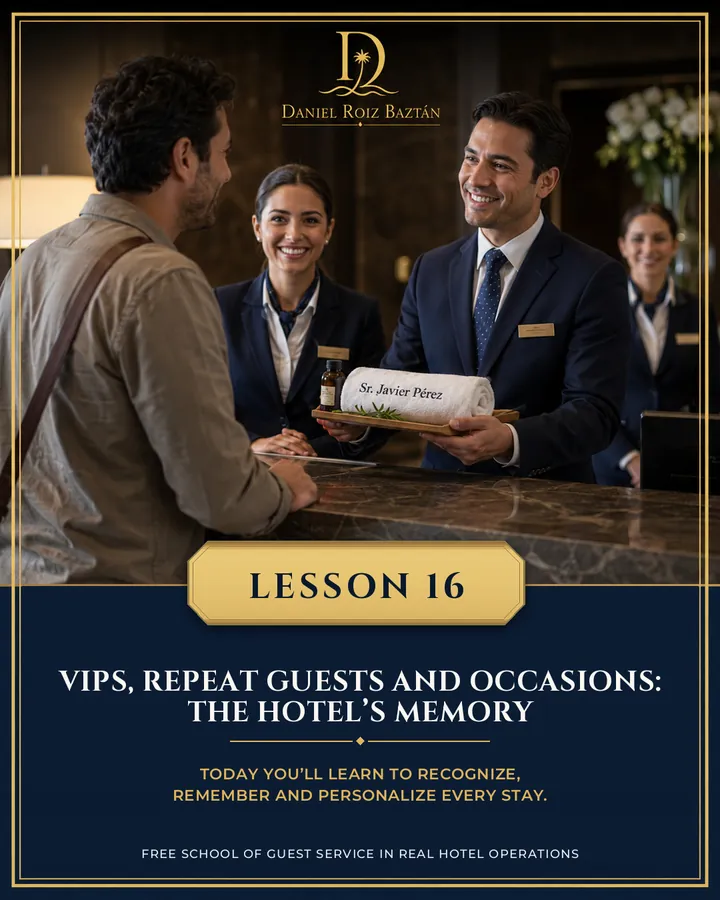
A hotel with memory feels like a hotel with a soul — and memory is crafted. The repeat guest recognized by name before reaching the front desk, the pillow that is already the way they asked for it a year ago, the anniversary someone remembered: none of that is spontaneous magic. It is a three-part system: capture only the information useful for providing the service, keep it in the authorized medium and execute it at the right moment. Good memory spares the guest from having to repeat themselves without turning their private life into open information. That is the standard; the size of the hotel is no excuse.
The script, step by step
- 1Capture only what is necessary. A useful preference shows up once: “prefers a high floor,” “requests a different pillow,” “is celebrating an anniversary.” It is recorded only if it improves the service, and through the established channel. Health data or especially sensitive data always follow the hotel’s specific protocol.
- 2Keep it in the authorized medium. The PMS or an approved tool, with access limited to those who need it to look after that guest. No personal notebooks, loose notes or indiscriminate conversations: the hotel’s memory must be useful, accurate and protected.
- 3Prepare the arrival. Before each day, the arrivals list is read with a magnifying glass: Who is coming back? What do we know about them? What occasion are they bringing? The repeat guest is welcomed by name and with their history: “Mrs. Díaz, welcome back — we’ve prepared the quiet floor for you, like last time.”
- 4Execute the occasion with meaning. An anniversary touch is valued not for its cost but for its aim: better a handwritten note that mentions what they told us than an impersonal standard. Personalization shows in the fact that it couldn’t be for any other guest.
With limited resources: how to hold the standard
In front of the guest
Welcome the repeat guest with their name and their history. Confirm the preference elegantly (“Shall I prepare your room like last time?”).
Make them repeat to different employees what they already said: every repetition is a small betrayal by the system.
Broadcast details of the occasion without their permission (announcing the anniversary to the whole table, for example): the occasion is theirs; the hotel accompanies it with the discretion they set.
Common mistakes
- Capturing and not sharing: information kept in your personal memory is personalization that lasts a single shift.
- Preferences noted and not executed: promising memory and failing at it is worse than not having any.
- Confusing VIP with “the one who pays the most”: the humble guest who comes back every year is the hotel’s most profitable ambassador.
- The cloned touch: when every anniversary receives the same thing, nobody receives anything.
“Personalization is information plus execution.
Without either one, it’s luck.”
About a repeat guest you know only three things: they always travel alone, they have breakfast first thing and they once asked for a room away from the elevator. Design their perfect arrival at almost zero cost: what you prepare, what you say to them when you welcome them and what you note for next time. In the answer that follows, I share my version.
VIPs, Repeat Guests and Occasions: The Hotel’s Memory
My arrival for that guest: a room in a quiet area assigned in advance — without him asking, because he already asked once and once is enough. In the greeting, his history: “Welcome back; I’ve prepared a quiet room for you, like the one on your last visit.” Eight words that say “we remember you.”
And the other two details working in silence: I let the breakfast team know he’s an early riser — his usual table ready first thing, his coffee coming out with no wait — and no pushing him to socialize: he travels alone for a reason, and lesson 19 will teach you that the bubble is respected.
Notice the pattern: three humble details, zero euros, and that guest has just decided where he’ll stay for the next ten years. Loyalty isn’t crafted by the points program: it’s crafted by memory put into practice.