 In Front of the
In five lines
The spa has a commercial paradox: it is one of the hotel’s highest-margin departments and, at the same time, the place where being sold to feels worst. A client who has just relaxed doesn’t want a closing pitch — and yet they may appreciate an honest recommendation based on what was observed during the service and within the professional’s qualifications. Spa selling is calm or it isn’t selling at all: it is framed as care, not as diagnosis, and it leaves the decision entirely in the client’s hands. Sold that way, the next appointment isn’t a receipt: it’s a relationship.
The script, step by step
- 1Professional observation is your authority. During the treatment you can identify sensations or responses that are typical of the service and within the scope of your training. Explain them in careful language, without diagnosing medical conditions, attributing clinical causes or taking the place of a healthcare professional. If a warning sign appears, the treatment is stopped and the client is referred according to the protocol.
- 2The post-treatment recommendation, in 45 seconds. The moment is the close, with the client calm: what you found, what would do them good and why, and a specific proposal — “with the tension you’re carrying in your neck, it would do you good to come back in two weeks for something more targeted; if that works for you, I’ll put it down for you.” Truth, benefit, option. And silence: the decision is theirs.
- 3Products, only if it’s true. The cream or the oil is recommended when it solves something real for that client — and it is shown by using it or explaining it, not by reciting it. A product sale that doesn’t fit is charged once; lost trust is paid for forever.
- 4No chasing. A no — or a silence — closes the sales chapter with the same smile it was opened with. The client who didn’t buy today but left at peace is the one who comes back, recommends and buys tomorrow. The one who left feeling pressured doesn’t come back — and neither do their friends.
With limited resources: how to hold the standard
In front of the guest
Recommend based on what you observed, in plain words and leading with the benefit. Accept a no with the same warmth as a yes.
Recite the monthly promotion to everyone the same way. Turn the close of the treatment into a sales counter.
Use the vulnerability of the moment — the client relaxed, in a robe, grateful — as leverage for pressure: that sale is the exact betrayal of what the spa promises. And never invent findings (“this is in awful shape”) to justify a sale.
Common mistakes
- Selling before serving: a recommendation only has authority once your hands have earned it.
- The discount as the only argument: price convinces for a day; a professional, prudent and well-explained recommendation builds a relationship.
- Recommending nothing for fear of looking like a salesperson: keeping quiet about what the client needs is bad service too — the line isn’t whether to recommend, but how.
- Forgetting the authorized record: continuity is documented with the minimum necessary information, in the approved system and with restricted access. Never in personal notes or informal client histories.
“Wellness isn’t sold with pressure.
It’s recommended with honesty.”
Design your perfect 45-second post-treatment recommendation for this case: a client with obvious neck tension, first visit, leaving tomorrow but living an hour from the hotel. Write it word for word — finding, benefit, proposal and close. In the answer that follows, I share mine — and we begin Module 10: Entertainment.
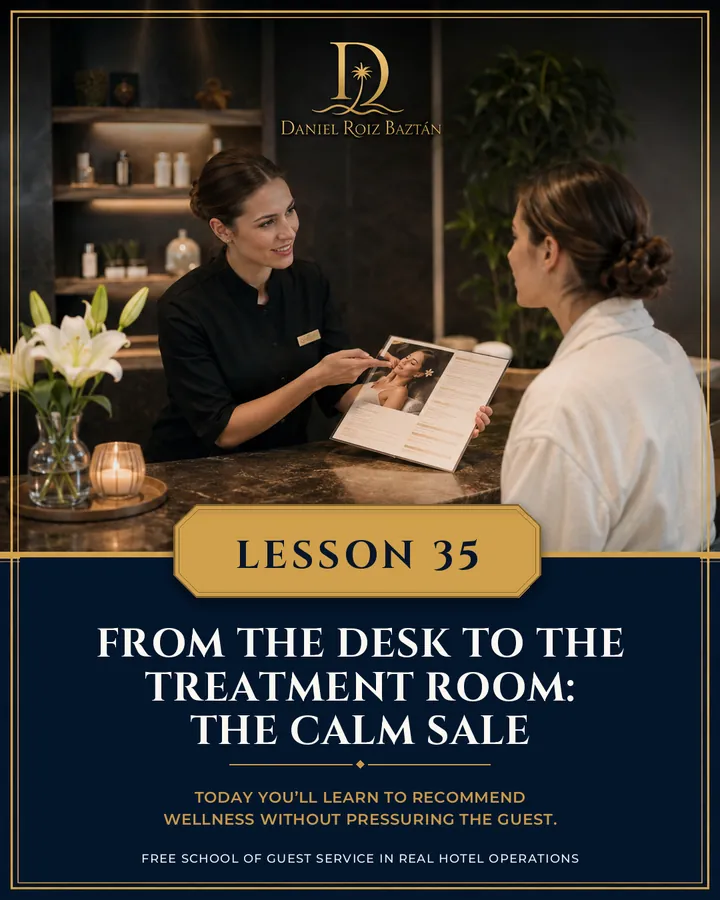
From the Desk to the Treatment Room: The Calm Sale
My 45 seconds, stopwatch in hand: “How do you feel? [answer] I’m glad. During the session you mentioned tension in your neck area, and we worked on it within the treatment you chose. If you found it beneficial, we can consider another tailored session during your stay and see how you’re feeling then. If the pain persists or gets worse, the right thing to do is to consult a healthcare professional. If it suits you, reception can find you a slot — no obligation.”
The anatomy of why this sells without selling: it starts with how the guest feels, carefully explains what service was performed, proposes an option within professional competence and clearly marks when a referral is appropriate. No invented causes, no diagnosis, no improvised clinical instructions. The recommendation is born of the attention given, not of the catalog.
The comparison that explains everything: “we have a promotion on five-session packages” is pressure with a discount. “If you found it beneficial, we can consider another session and see how you’re feeling” is a careful wellness recommendation. Same possible financial result, opposite feeling — and only one protects trust.
“The spa sells a state of being. Your silence is part of the treatment.”
“Wellness isn’t sold with pressure. It’s recommended with honesty.”
End of the module. The next part continues with Module 10: Entertainment.